This is a question with two answers: yes and no.
Shisha, what most people call hookah, waterpipe, or hubble bubble, may or may not contain nicotine.
However, the question, Does shisha have nicotine?, is particularly important if you're trying to watch what you smoke. And yes, we should all be concerned about what we put into our bodies.
For many, smoking shisha is a social activity, a chance to sit around with friends, enjoy flavored tobacco, and hit leisurely puffs. While shisha is not perceived to be as dangerous as cigarette smoking, the truth is somewhat complicated.
Let's talk in detail about shisha, just how much nicotine it contains, the associated health risks, and how it compares to other tobacco products. We'll also plug you to tobacco-free shisha alternatives to help you enjoy the same smoking ritual minus the risks associated with nicotine.
Key Takeaways:
- Traditional shisha contains nicotine, but there are tobacco-free alternatives that don't.
- One hookah smoking session exposes you to 1.7 times more nicotine and 9 times more carbon monoxide than a single cigarette.
- The nicotine in shisha is highly addictive. It impairs cardiovascular functions and increases the risks of lung and oral diseases.
- While vaping is likely less harmful than shisha, it also has health risks linked to nicotine-laced e-liquids.
- Blakk Smoke's nicotine-free shisha is a healthier alternative to tobacco-based shisha.

What is Shisha Made Of?
Traditional Shisha
Traditional shisha is one of two primary products that were smoked in a water pipe before the invention of the modern, juicy, flavored mu'assel.
1. Tombak (or Tumbak/Ajami): The Oldest Way
This is the most historically pure and intense form of tobacco shisha, often smoked in a hookah or water pipe. It's associated with Middle Eastern countries and some parts of the Levant.
-
Ingredients: Coarse, unflavored, strong dark-leaf tobacco, often Nicotiana rustica or a dark Virginian variety, and water.
-
Preparation: People heavily washed or soaked the tobacco leaves in water to remove some of the nicotine and harshness. Hookah smokers would then peel off the central vein and wrap the whole leaves around the outside of the bowl or the top of the water pipe stem itself. They then place the charcoal directly on the tobacco leaves.
- Experience: This type of shisha and water pipe smoking created a very potent, harsh, and distinct tobacco flavor with intense nicotine delivery. This method is still practiced by traditionalists, but it's very different from the sweet, smooth shisha that most people are familiar with today.
2. Early Mu'assel/Jurak (The Pre-Modern Sweetener)
The earliest varieties of sweet and moist shisha were created by adding tobacco to a simple sweetener. This type of shisha is known as Jurak (popular in India and Syria) or unflavored Mu'assel.
-
Ingredients: Finely chopped or ground tobacco (often a dark, strong leaf), molasses or honey, and sometimes dried fruit or spices. Glycerin and modern flavorings were not included.
-
Preparation: Users lightly processed or ground the tobacco leaf. They then mixed it with molasses from sugarcane or honey to form a thick, dark paste. They introduced a mild variation in flavor by adding natural spices, such as cardamom or saffron, or pulps of dried fruits. This sticky mixture was put into a clay bowl with a hookah pipe, at times without foil, with the charcoal placed right on top.
- Experience: Due to the sweetener, this shisha had a milder nicotine hit than Tombak, but still gave a strong tobacco taste with a sweet, smoky background.
The modern, highly flavored, and smooth mu'assel with dozens of fruit, candy, and flavors is actually a relatively recent innovation, becoming widespread only in the 1990s.
Modern Shisha Tobacco Products
Today, the main components of shisha include:
-
Tobacco: Nicotine is a naturally occuring compound found in the tobacco plant. The most common type of tobacco is Virginia blonde leaf (milder), though creators also use stronger dark leaf types.
-
Molasses or Honey: These act as sweeteners. They also give the mix a sticky, moist texture that helps with moisture retention and improves heat tolerance.
-
Glycerin (Vegetable Glycerin): This ingredient is very important for the thick, dense smoke clouds in shisha.
- Flavoring Agents: These are usually fruit extracts or food-grade flavorings, such as apple, mint, or grape.

Not All Shisha Contains Nicotine
Worth noting, however, is that non-tobacco products or herbal varieties of shisha don't contain nicotine. These products substitute the tobacco leaves for other substances, like:
- Sugarcane pulp
- Tea leaves
- Dried fruits in pieces
These newest alternatives seek to mimic the feeling of smoking hookahs with no tobacco or nicotine, such as Blakk Smoke's fruit shisha.
At Blakk Smoke, we create shisha with 100% real fruit and absolutely zero tobacco. We're proudly leading the pack with tobacco-free, nicotine-free shisha for individuals and crowds who are done with nicotine, its addictive nature, and health risks.
Explore Blakk Smoke's nicotine-free fruit shisha today for a taste of clean clouds.
So, Just How Much Nicotine Is in Shisha?
Here's where it gets interesting. You may have heard that smoking shisha is less harmful than smoking cigarettes. While that's partially true, in terms of smoking frequency and duration, it doesn't mean shisha is safe.
Note that the nicotine content in shisha may vary due to factors, including:
- The type of tobacco used.
- How long the session of smoking lasts.
- The size of the hookah or shisha pipe.
That is, even though you're not using as often as the average cigarette smoker, each session may be exposing you to a substantial nicotine dose.
On average, one session of smoking shisha can last anywhere between 20 minutes and an hour, or even more. During this period, you inhale more tobacco smoke and nicotine than when smoking cigarettes.
As a matter of fact, the American Lung Association (ALA) notes that you're exposed to 1.7 times more nicotine than when smoking cigarettes.
Let's look at this in more detail below.
Comparing Nicotine Content in Shisha to Other Tobacco Products
1. Shisha vs. Cigarettes
The question is: Is using shisha worse than smoking cigarettes? Both have their risks; the difference comes in the amount of nicotine delivered during a session.
One cigarette contains between 8 and 20 milligrams of nicotine. Note that a single session of cigarette smoking usually lasts for about 5 minutes. In contrast, a session of shisha, taking up to an hour, may provide a quantity of nicotine ranging from 100 to 200 milligrams, considering the size of the bowl and the type of tobacco.
It thus follows that shisha smokers can inhale more tobacco smoke and nicotine per session than regular cigarette users. This is despite the fact that the smoking experience might feel slower and less intense.
Read more on this in our detailed comparison of hookah vs cigarettes here.
2. Shisha vs. Vapes
Now, let's bring the vapes or e-cigarettes in. Many people think vaping isn't as harmful as both shisha and cigarette smoking, but it's not always the case.
Vapes can differ in nicotine content considerably, depending on the liquid used. Standard e-liquids contain 3 to 18 milligrams of nicotine per milliliter. Vaping tends to deliver less nicotine than shisha because the smoking session is often shorter, but still depends on the device and the e-liquid.
However, if you're comparing a hookah session with vaping, given the extended duration of inhalation, hookah tobacco still delivers more nicotine than vapes.
Here's a detailed guide on how much nicotine is in a vape to help you understand this even better.
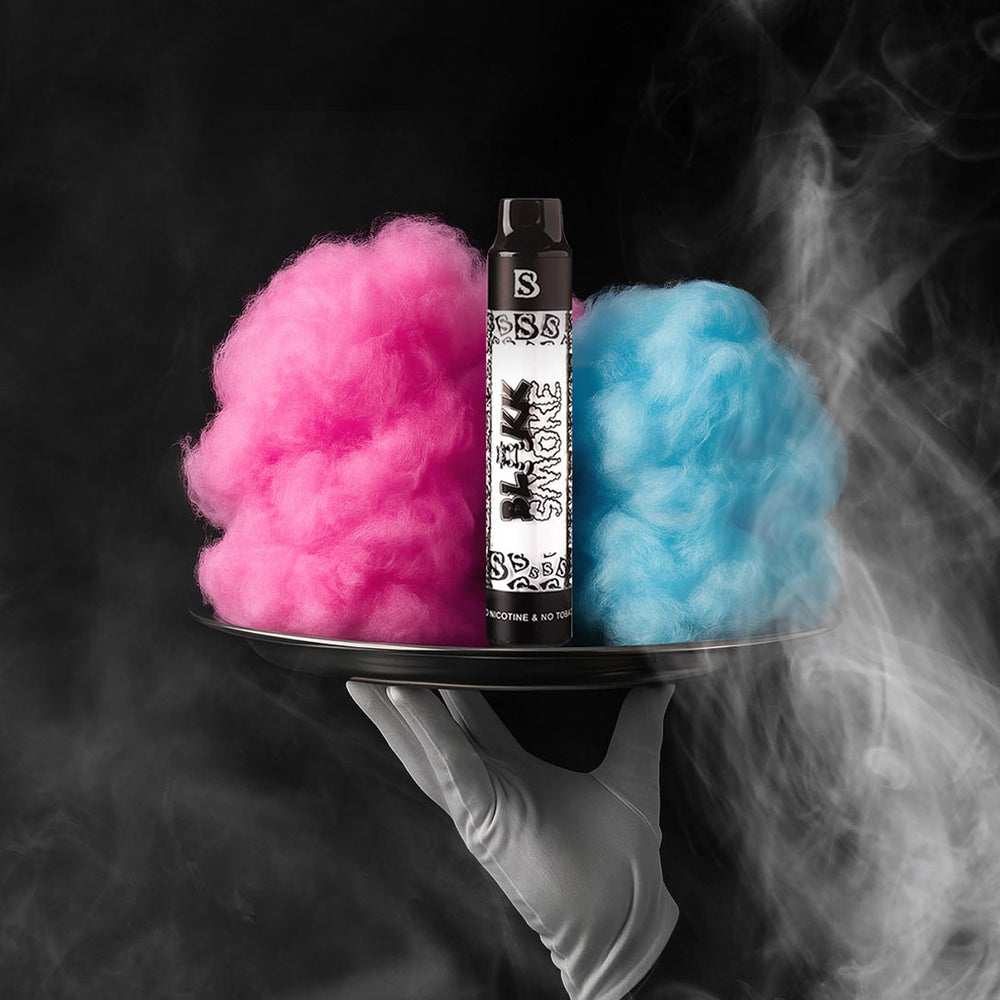
Note: Tobacco-free vapes don't contain nicotine. At Blakk Smoke, we offer nicotine-free hookah pens filled with 2023 puffs of fruit-infused vape juice, perfect on the go
Try Blakk Smoke's nicotine-free hookah pens today.

Health Effects of the Nicotine in Shisha on Your Body
Doctors link the risks of shisha smoking to nicotine and the whole cocktail of substances in that thick, aromatic smoke. Nicotine poses many health risks since it's a highly addictive psychoactive drug with important physiological effects.
Note: The risks from shisha smoking are greater compared with cigarettes, as a normal shisha session goes on much longer and involves far greater tobacco smoke exposure.
The health effects of nicotine include:
1. Damage to the Cardiovascular System
Nicotine is an effective cardiovascular stimulant and vasoconstrictor. Its action leads to immediate and long-lasting harmful effects on the heart and blood vessels, such as:
-
Increased Heart Rate and Blood Pressure: Nicotine mediates the release of catecholamines, such as adrenaline, leading to a rapid and significant rise in heart rate and blood pressure. A study by Patil et al. (2022) in the Journal of Oral Biology and Craniofacial Research shows that shisha smoking increases the heart rate by 6-13 beats per minute, systolic blood pressure by 3-16 mmHg, and diastolic by 2-14 mmHg. This instantly puts a load on the cardiovascular system.
-
Vasoconstriction: According to Whitehead et al. (2021) in "Nicotine and Vascular Dysfunction," nicotine leads to vasoconstriction or the narrowing of arteries, thus reducing blood flow and increasing the amount of work the heart must do to pump blood throughout the body.
-
Artery Hardening: Nicotine can also contribute to the stiffening of arterial walls, a process known as atherosclerosis. This further increases the amount of work your heart must do and poses severe cardiovascular disease risks.
- Increased Risk of Heart Disease and Stroke: Through the mechanisms above, chronic nicotine exposure, along with other toxins in shisha smoke, significantly heightens the long-term risk of stroke and other heart diseases.
2. Addiction and Central Nervous System Effects
Nicotine is a highly addictive agent that quickly reconfigures brain chemistry. Users experience:
-
High Addiction Risk: Researchers Patil et al. (2022) note that nicotine binds to receptors in the brain, facilitating the release of various neurotransmitters, among these dopamine. This is the "feel-good" neurotransmitter. The surge in dopamine reinforces the behavior and leads to addiction and dependence.
-
Withdrawal Symptoms: Once addicted, you'll experience withdrawal symptoms, such as irritability, anxiety, restlessness, and difficulty concentrating when not using nicotine. This drives the cycle of continued use.
- Harm to Developing Brains: Nicotine is particularly hazardous among adolescents and young adults who use shisha frequently because brain development typically continues up until about age 25. Nicotine exposure harms the areas of the brain that control attention, learning, mood, and impulse regulation. Here's more on how nicotine affects the brain.
3. Reproductive and Developmental Harm
Exposure to nicotine is strongly associated with adverse reproductive outcomes. These include:
-
Pregnancy Risks: Reports from the Centers for Disease Control and Prevention (CDC) (2023) indicate that nicotine is toxic to developing fetuses. The researchers link hookah tobacco use among pregnant women to increased incidences of low birth weight babies and pre-term birth.
- Female Reproductive Health: Nicotine can alter hormone levels, resulting in irregular menstrual cycles.
Effects of the "Cocktail of Substances" in Shisha
It's important to note that although nicotine is an addictive agent that causes serious cardiovascular, pulmonary, and health impacts, the other non-nicotine toxins found in shisha smoke are responsible for severe, life-threatening risks, including:
-
Carbon Monoxide (CO) Poisoning: The burning charcoal generates CO. Exposure to CO during one hookah smoking session can be up to 10 times that of a single cigarette. Patil et al. (2022) explain that this can cause acute carbon monoxide poisoning and chronic damage to the heart.
-
Tar and Carcinogens: Both the ALA and CDC indicate that shisha smoke also contains high levels of cancer-causing chemicals (carcinogens), such as polycyclic aromatic hydrocarbons (PAHs), heavy metals, and tobacco-specific nitrosamines, which lead to increased risks of lung and oral cancers.
- Respiratory Diseases: Inhaling smoke, tar, and fine particulates results in reduced lung function, with heightened risks of Chronic Obstructive Pulmonary Disease (COPD), chronic bronchitis, and emphysema, according to Patil et al. (2022).

Do You Take in Nicotine When Inhaling Secondhand Smoke?
Just like cigarettes, secondhand shisha smoke contains many of the same toxic substances, including nicotine, carbon monoxide, and heavy metals.
In an enclosed environment, the level of these harmful chemicals increases, affecting the health of those around.
So, if you're hanging out at a shisha bar with friends or enjoying a round of hookah in the comfort of your own home, know that those around you are also inhaling nicotine and other toxic chemicals due to secondhand exposure to the passive smoke.
How to Reduce the Risks of Shisha Smoke
If you're determined to enjoy your hookah but want to reduce the health effects, there are some ways to help mitigate the negative effects.
First, smoke less, and don't inhale deeply. However, this is not an effective method as the nicotine intake will compound over time.
The most effective way to reduce the health risks of smoking shisha is to quit altogether. Although shisha is addictive due to the nicotine content, you can quit easily, provided you have support and you're committed.
One such type of support comes in the form of non-nicotine alternatives that can help you transition by providing the same hookah ritual, such as Blakk Smoke's nicotine-free hookah vapes.
Can You Enjoy Shisha Without Nicotine?
Absolutely yes! Many people have switched to nicotine-free shisha tobacco or fruit-based alternatives that give them the same enjoyable flavors without the addictive substance.
Blakk Smoke revolutionized the hookah with nicotine-free hookah pen bundles filled with fruit-infused liquid instead of tobacco. We offer a much healthier alternative with no compromise on flavor.
FAQs
Is Shisha as Bad as Vaping?
While both have risks, the toxic components of shisha smoke, which include nicotine, carbon monoxide, and heavy metals, are more dangerous than those in most vaping liquids. Vaping is not without risk, but shisha may pose more serious long-term health consequences.
How Bad Is Shisha for Your Lungs?
Shisha smoke contains a cocktail of harmful chemicals that can lead to lung impairment, chronic bronchitis, lung disease, or even lung cancer after prolonged use.
What Are the Benefits of Shisha?
Shisha smoking is a social activity where many people bond and relax. However, the health risks of hookah use outweigh any benefits, especially when it comes to nicotine addiction and lung damage.
How Many Cigarettes Are in Shisha?
A single hookah smoking session can deliver as much nicotine as smoking one to two packs of cigarettes, depending on the duration and intensity. Read more on how many cigarettes are in one hookah here.
Is Shisha Better Than Cigarette Smoking?
While shisha may seem less harmful compared to cigarette smoking, it has a number of serious health risks, including nicotine addiction and chemical exposure. Try Blakk Smoke's nicotine-free mint fruit shisha for a healthier alternative.
What is the 50 Rule for Shisha?
The "50 rule" refers to the belief that one hookah session is equivalent to smoking 50 cigarettes. This is because a shisha session often involves more extended inhaling, which leads to a greater amount of nicotine exposure.
Conclusion
Yes, shisha has nicotine if it's made of tobacco. An individual session contains a significant amount of nicotine, capable of leading to addiction and a host of health problems.
The idea of smoking shisha socially in hookah bars is alluring. However, you cannot afford to ignore its long-term risks regarding nicotine addiction and exposure to cancer-causing chemicals.
If you seek a healthier alternative, switch to tobacco-free shisha options from Blakk Smoke. With 100% real fruit-based shisha containing no nicotine or tobacco, the hookah experience just got much safer.
References
- American Lung Association. (2025, April 8). Facts about hookah. ALA.
- Centers for Disease Control and Prevention. (2023, October 13). Smoking, Pregnancy, and Babies. CDC.
- Patil, S., Mahuli, A. V., & Warnakulasuriya, S. (2022). Effects of smoking shisha, cancer risk, and strategies for prevention of shisha habit. Journal of Oral Biology and Craniofacial Research, 12(4), 439-443.
- Whitehead, A. K., Erwin, A. P., & Yue, X. (2021). Nicotine and vascular dysfunction. Acta physiologica, 231(4), e13631.
Share:
Can You Bring a Vape on a Plane? Everything You Need to Know
What is Vape Juice Made Of? Key Ingredients and More