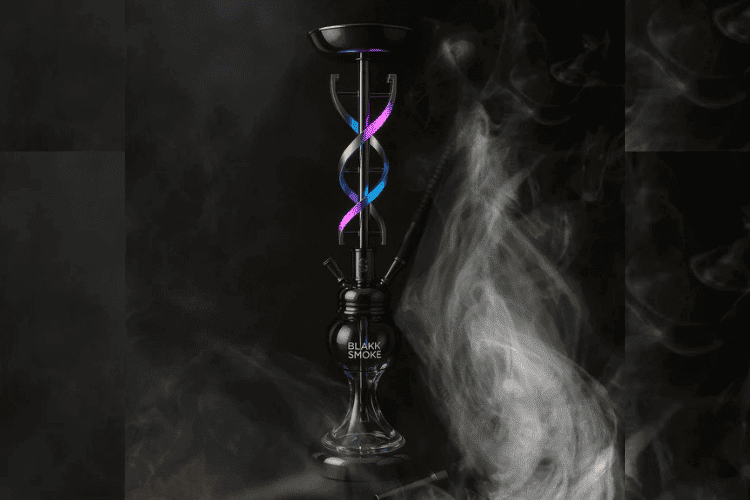
Let's take a trip back in time to where the hookah originated. The first smokers, sitting with their water pipe and tobacco, would have never predicted that people all over the world would one day enjoy the hubbly bubbly hookah.
That sweet, flavored tobacco swirling through water pipes has a rich, complex history that spans centuries. So, where did it all start?
The Great Debate: Tracing the Ancient History of Hookah
Hookah, also called water pipe, hubble-bubble, argileh, or narghile, carries a story of cultural exchange, innovation, and evolution. Its tale spans continents and centuries, and there are multiple theories about where it all began.
Theory A: The Indian Subcontinent & Emperor Akbar
Let's kick things off with the consensus. Many historians agree that the modern hookah originated in the Indian subcontinent, particularly in Mughal India in the late 16th century.
The first widely accepted theory attributes the invention of the hookah to Abul-Fath Gilani, a Persian physician in the court of Emperor Akbar. When tobacco leaves were introduced to India from the New World (the Americas) via European traders, the nobility loved it. However, some of Akbar's nobles worried about the health effects of smoking tobacco straight up.
Gilani’s brilliant solution was to "purify" the tobacco smoke by running it through water. According to a review from the World Health Organization (WHO), Gilani thought that “smoke should be first passed through a small receptacle of water so that it would be rendered harmless.” While WHO found this to be not entirely true, it was the thought behind the hookah’s water base.
Early hookahs were rudimentary, sure, but they were genius. Creators used a coconut-shell base filled with water, and they inserted a bamboo reed at the top through which the user inhales. People used these water pipes to smoke whole tobacco leaves.
The water filtration system was revolutionary at the time. It made the smoking experience smoother and cooler than direct inhalation of tobacco smoke. It was a convenient, more refined, and less harsh method of smoking tobacco.
Hookah smoking quickly became a major status symbol and was mainly reserved for the nobility and the super wealthy. The hookah grew as a cultural asset in India, spreading from court to court. Imagine being invited to smoke with the Emperor. That’s how much of a big deal the first hookahs were.
Theory B: Ancient Persia and the Galyān
While most people agree with the Indian origin, there’s a historical counterpoint that complicates the story!
Some accounts suggest the general concept of the water pipe, known by the Persian word ḡalyān, existed earlier in Ancient Persia, years before Emperor Akbar even got his hands on tobacco.
So, what were they smoking? People may have initially used these devices to smoke opium or hashish before the widespread introduction of tobacco leaves in the 16th century.
But here's the catch! Regardless of where hookah originated first, it was Persian culture that truly refined the mechanism. Once tobacco arrived in Persia in the 16th century, spreading from the Indian subcontinent, the ḡalyān began to evolve. The Persians refined the design, incorporating a water base and a metal stem that made the smoking process more efficient.
They started smoking a strong, dark leaf tobacco called Ajami. This laid the groundwork for the intricate, luxurious devices that would dominate the Ottoman Empire later on.
Addressing the Gap: The Real Origin of Hookah
While historians often debate the precise origins, the consensus seems to be that the hookah, as we know it today, emerged in Mughal India, where Abul-Fazi Gilani introduced the water filtration system for smoking tobacco.
In contrast, Persia had water-filtration devices used for smoking opium or other substances, but their involvement in refining the design and spreading the practice across the region is undeniable.

Global Spread and Cultural Transformation of Hookah
As the hookah evolved, its influence transcended borders and cultures. It was during this phase that hookah became a prominent symbol of social connection and culture.
Ottoman Empire: A Status Symbol
The hookah spread quickly, traveling west and reaching the Ottoman Empire (now modern-day Turkey) around the 17th century. This is where the hookah truly became a work of art.
The previous purely functional smoking device transformed into a luxury, decorative piece. The Ottomans used intricate brass designs, ornate glass bases, and stunning craftsmanship. They adorned it with royal and religious markings, making it a significant status symbol among the elite.
Sultan Ahmed and other members of high society would smoke after royal dinners and at diplomatic meetings. The act of sharing a hookah became a sign of immense trust and respect. If you were offered the pipe, you took it. Refusing a puff was generally considered rude and impolite.
The Arab World & the Birth of Shisha
The journey continued, and in the 19th century, the tradition migrated south to the Arab world and North Africa, gaining immense popularity in Egypt and the Levant. This is the era that created the hookah experience most young adults recognize today.
Egypt: The Birthplace of Sweet Shisha
Before the era of mu'assal (which literally means "honeyed" in Arabic), hookah smoking was a much harsher experience. People were primarily smoking tobacco called tumbak or ajami. This was strong, dark-leaf tobacco that was often soaked and pressed. It was intense, harsh, and had a potent nicotine punch.
The shift happened when the tradition gained huge popularity in Egypt during the late 19th or early 20th century.
-
The Innovation: Egyptian producers started mixing the tobacco with molasses or honey, along with glycerine to keep the mix moist and smokable for longer periods. This process created a milder, stickier substance called shisha with a slow burn.
-
The Flavor Bomb: They also began adding fruit essences and flavors, like apple, grape, mint, and more, to this mixture. This invention transformed the harsh, smoky experience into a sweet, aromatic, and palatable one that appealed to a much wider audience, including young adults.
- The Vibe: This fueled the rise of shisha cafes and coffee shops in Egypt and the entire Arab world. It made hookah and shisha smoking a truly communal, all-day social activity rather than just something for older gentlemen.
People further refined the water pipe. They added the metal smoke column and the purge port, which is the small valve that lets you clear out stale smoke.
While the hookah (the actual water pipe) originated in the Indian subcontinent and Persia, and was perfected in the Ottoman Empire, Egypt is the place where shisha (the modern flavored tobacco or mu'assal) was created.
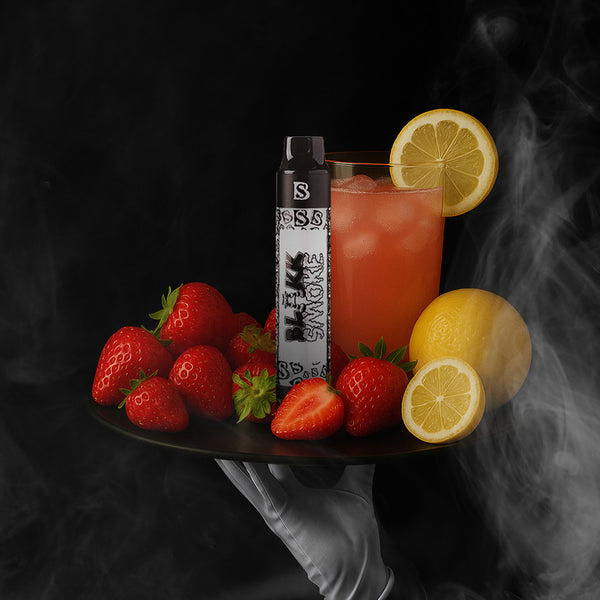
Strawberry Lemonade Hookah Pen
High-quality ingredients & craftsmanship
Shop NowThe 20th and 21st Century: Hookah in the Modern Era
By the 20th century, hookah spread to the Western world through immigrants from the Middle East, India, and North Africa. However, as tobacco smoking began to face increasing scrutiny in the latter half of the century due to health concerns, so too did hookah smoking.
Organizations like the WHO and the Centers for Disease Control and Prevention (CDC) revealed that shisha smoking posed similar risks to cigarette use, including the inhalation of carbon monoxide, heavy metals, and nicotine.
Despite these health concerns, hookah bars and lounges continued to gain popularity worldwide, especially in urban centers. The social aspect of smoking hookah, its ability to bring people together, remained a central feature of its appeal.
Today, the modern water pipe has evolved but still features the glass water base, the pipe where the smoke passes, the metal smoke column for cooling, and the purge port to manage the smoke flow.
Shisha, too, has evolved. It now comes in a wider variety of flavors and mixes. At Blakk Smoke, we ditch the tobacco for 100% real fruit. Our fruit shisha is the ultimate alternative to shisha tobacco, giving you a clean, refreshing, nicotine-free way to hookah every time.

Current Forms of the Hookah
With the rise in modern developments, more people from different regions have continued to perfect this ancient smoking device. The core goal remains the same: to deliver that smooth, flavorful smoke and big clouds. However, the health concerns surrounding traditional hookah use are now more prominent than ever.
The WHO has shown that the health risks of smoking hookah are not just a myth. Traditional hookah smoking can contribute to high blood pressure, heart disease, respiratory problems, and other infectious diseases. WHO found that shisha smoking is particularly common among high school students and young people, which raises the risk for poor brain development and adverse mental health effects.
In our research on hookah vs cigarettes, we found that a single session of hookah smoking is equivalent to puffing on multiple cigarettes.
As such, Blakk Tatted, the visionary behind Blakk Smoke, recognized the need for a convenient, healthier, and portable version of the hookah. He condensed the entire ritual into the Hookah Pen, a small, portable, and patented vape device perfect for the 21st-century lifestyle.
Black Tatted's hookah vape pen, which some people might call a shisha pen, has the following features:
- It's nicotine-free; it completely ditches tobacco for real fruit juice
- It's prefilled with 2022 puffs of clean, nicotine-free clouds
- It's automated with breath-activated technology, no buttons or charging needed
- There's a variety of flavors to match any vibe, from mints to fruity and candy-inspired blends
In fact, Forbes recognized Black Tatted's hookah pens as the healthiest hookah/vape alternative on the market today.
Shop Black Tatted's nicotine-free hookah pens and enjoy clean clouds without the dangers of nicotine or tobacco.
Frequently Asked Questions
Which Country Invented the Hookah?
Most historians credit the invention of the water pipe (specifically for smoking tobacco) to the Indian subcontinent (Mughal India) in the late 16th century. Other accounts also point to Ancient Persia. However, the consensus is that the water filtration method originated in India. However, Persia's involvement in refining the design and spreading the practice across the region is undeniable.
Is Hookah an Arab Thing?
Mostly. While the hookah gained popularity and evolved significantly in the Arab world, especially in Egypt and the Levant, where shisha cafes became part of the culture, its origins are traced to the Indian subcontinent and Ancient Persia.
Which Culture Smokes Hookah?
Hookah smoking is a major cultural expression in the Middle East, Turkey, the Indian subcontinent, and Northern Africa. It has also become a global trend, enjoyed by young adults and many hookah smokers across the Western world.
What Do Arabs Call Hookah?
In many parts of the Arab world, people often interchange the word hookah with shisha (referring to the flavored tobacco mixture) or nargile.
Is Shisha Arabic or Turkish?
The tradition of smoking hookah is popular in both the Arab world and Turkey, which was part of the Ottoman Empire. The word shisha gained prominence in the Arab world, while nargile is more commonly used in Turkey.
Is Hookah a Drug or Not?
A hookah is a smoking device. The substance being smoked is generally tobacco (shisha tobacco). While tobacco contains the addictive substance nicotine, it is not classified as an illicit drug. Blakk Smoke products, on the other hand, for instance, our mint hookah vapes, contain no nicotine or tobacco, only fruit juice.
Is Hookah or Shisha Smoking Healthy?
No. Traditional hookah smoking involves inhaling smoke from burning tobacco. It exposes you to carbon monoxide, heavy metals, and other toxic substances. The water filtration doesn't make it safe. Blakk Smoke is the healthier alternative, using only fruit-infused liquid to keep the ritual alive without the risk.
Conclusion
So, where did hookah originate? The history of hookah and its origins are debated, but the journey from the Indian Mughal courts to Middle Eastern culture is clear. The hookah has become a cultural phenomenon, a way to connect with others, and a symbol of status.
At Blakk Smoke, we continue this tradition of connection, but with a healthier twist. Experience hookah the way it was meant to be, without the harmful substances. Join the revolution with our nicotine-free hookah vape pens today. Let’s keep the social spirit alive while protecting our health.
References
- Centers for Disease Control and Prevention (CDC). (2024, October 17). Hookahs. CDC
- WHO Framework Convention on Tobacco Control. (2025). Waterpipe overview. WHO.
Share:
What is Vape Juice Made Of? Key Ingredients and More